Friday, 29 May 2026

Dead Curious article and podcast

Recently, I was honoured to be invited to give an interview for the 'Dead Curious' magazine and podcast. Not only do I love the name, but I was also very impressed by the journalist, Daisy Sanderson, who interviewed me. She had clearly done her homework and asked very insightful questions. Of course, she was asking me about Human Taphonomy Facilities, or 'body farms', and why the UK doesn't have one...yet. We discussed the same reasons that I have mentioned before - the use of pigs as analogues for humans is not sufficient because pigs do not have the same lifestyles, habits, diets or medication that humans do, and the best subjects for understanding human decomposition are human themselves; data from existing facilities in the USA, Canada, Australia and the Netherlands are not always applicable or appropriate to UK forensic cases, because we know that decomposition is very dependent on local conditions. We talked about how HTFs have great potential for being training facilities, not only for forensic scientists, students, military and police, but also for cadaver dogs. And that there are more and more people who would like to donate their bodies to forensic science but who are currently thwarted by a lack of specific legislation. 

Read the article here. The podcast episode is coming soon!

Find out more about our HTF4UK campaign, express your views about Human Taphonomy facilities, and support the campaign here. 

Monday, 28 July 2025

Osteology Internship

Over the summer, I hosted an osteology intern in our department at the University of Central Lancashire (soon to be University of Lancashire). The intern, Ryver, was tasked with cataloguing part of the Village Farm Spofforth archaeological skeletal collection that we have on indefinite loan from the University of Sheffield, ECUS Ltd and York Museum Trust. This collection is available for research. Please email me if you are a researcher interested in applying for access. Ryver did an excellent job and seemed to enjoy the experience! I asked them to write a short summary of their experience as an intern. Here it is:

Over the summer of 2025 I have been doing an archaeology internship cataloguing the human skeletal remains from Spofforth Village Farm at the University of Central Lancashire, under the supervision of Professor Anna Williams. This Anglo-Saxon cemetery dates to roughly between the mid 7-9th century, the period often associated with England’s conversion to Christianity. The site was excavated in 2001 and yielded approximately 250 individuals from 117 grave cuts. My job has included organising parts of the University’s human remains collection, filling out skeletal recording forms, photographing individual elements and complete skeletons where appropriate, and creating an inventory to record the bones and individuals in the collection.

From neonate babies to middle aged people, the skeletons I looked at encompassed a wide demographic of people. I observed a number of different standard pathologies like dental calculus and osteoarthritis; as well as several unique and potentially disabling skeletal changes such as sacralisation of the L-5 in one individual, fusion of three thoracic vertebrae in another, and a healed humerus fracture in a third. Many of the individuals I got the chance to catalogue also had congenital disorders such as dolichocephaly (an elongated skull length to width) and two had brachycephaly (a shortened skull length to width ratio), these disorders are often associated with developmental disabilities. These findings, alongside the number of healthy skeletons I observed, demonstrate that this cemetery was home to a wide variety of individuals with a range of different needs and roles within the community.

This experience has been very fulfilling and enjoyable for me as a recent graduate, as I have been able to build on the skills I have developed throughout my undergraduate degree and gain more practical, hands-on experience. The opportunity to work with human remains on a more long term and repeated basis has allowed me to enhance my basic knowledge of the different skeletal elements to now be able to identify specific identifying features, pathologies and traits across a myriad of different situations and scenarios. This has resulted in me being able to recognise bones from only small fragments and clearly detail what they are for the catalogue, which is a skill that would have been impossible to develop so quickly after finishing my final year as an undergraduate without this internship. Furthermore, I now have a much better understanding of the post excavation archaeological processes and lab work; building on my existing experience, which was previously limited to the teaching environment, where the amount of time we had to practice osteological methods was far less than what I have had during the course of this internship.

In addition to this, the opportunity to work independently outside of a prescribed teaching environment has allowed me to develop both my autonomy and my confidence, in both my work and my personal skillset. As a result of this internship, I now feel much more prepared to go on to my Masters in Osteoarchaeology, and further, my future career. I am thankful for this opportunity and all of the skills I have developed over the course of this 10-week internship and look forward to developing these skills further over the course of my postgraduate education.


Some of the boxes holding the Village Farm Spofforth Anglo-Saxon
skeletal collection, with Ryver's excellent labelling

Sunday, 29 June 2025

New MSc courses: MSc Forensic Anthropology

Sorry I haven't posted for a while. I have been very busy, as usual! One of the things I have been busy with is getting two new forensic Masters courses through the validation process at the University of Central Lancashire (UCLan - soon to become the University of Lancashire). I am very proud to say that they are really exciting courses that take advantage of the expertise, resources and facilities at UCLan. They are MSc in Forensic Anthropology and an MSc in Forensic Biology and Investigation. 

The new MSc in Forensic Anthropology builds on UCLan's international reputation in forensic anthropology, and the very successful MSc course which ran for many years. Its content plays to the strengths of the staff, including me, Dr Will Goodwin, Peter Cross and Dr Noemi Procopio, and thus has a heavy emphasis on forensic taphonomy, anatomy and disaster victim identification. The course is one of the first that will be taught using the new 'block teaching' model that the university is adopting over the next few years. This means that each module will be taught over six consecutive weeks, with assessments happening in the seventh week. Teaching will be done on three days a week, and these will always be the same three days, to allow students (and staff) to plan their weeks. Students will only need to be on campus for those three days. The course will be very hands-on, practical and vocational, giving students the skills they need to enter and excel in the world of forensic anthropology. The modules will be:

Human and Comparative Anatomy - this will be quite an in-depth anatomy course, with students learning not just musculoskeletal anatomy (as other similar courses offer), but also the associated soft tissue anatomy, such as the cardio-vascular system, the respiratory system, and the digestive, reproductive, endocrine, and nervous systems as well. This gives students a much more rounded view, and a greater understanding of the interconnectedness of human physiology and anatomy, which is very useful when determining cause and manner of death, or the implications of trauma and pathology visible on the skeleton. It will also allow students to distinguish between animal and human bones, a very important skill for determining the forensic importance of a case. 

Forensic Anthropology - this will be a 'deep dive' into what information can be gleaned from the skeleton, and introduce students to the estimation of age at death from the skeleton, estimation of sex (not gender), and estimation of stature and ancestral affiliation. It will also cover trauma and fractures, and different types of skeletal pathology, as well as recent advances in forensic anthropology, and the application of imaging, proteomics, and isotope analysis to forensic anthropology problems. 

For the third module, the student chooses from three possible options (numbers permitting). They are:

(1) Forensic Taphonomy - this module covers decay and decomposition in a variety of conditions, and will involve fieldwork at TRACES, UCLan's 13-acre animal taphonomy facility. Students will get a chance to learn about the factors that influence, accelerate or decelerate decomposition rate, and estimation of post-mortem interval. 

Student undertaking research at TRACES

(2) Identification of the Living and Deceased - this module will cover identification techniques for living people, including biometric identification, and identification techniques for the deceased, in different situations, including disaster victim identification. 

(3) Forensic Genetics - this lab-based module will be a close look at collection, amplification and interpretation of DNA evidence, DNA polymorphisms, DNA databases, and the analysis of DNA profiles from different forensic cases.

The fourth module is Crime Scene to Court - this module will introduce crime scene investigation, collection, packaging and maintaining continuity of forensic evidence, then interpretation of that evidence in the lab, maintaining laboratory standards. In the final part of the module, students will learn how the UK judicial and court system works, and then present evidence as an expert witness in court. 

The final module is the Dissertation, a double-length module in which students undertake an original research project, using the wealth of state-of-the-art facilities at UCLan. They can undertake projects based on interpretation of evidence, taphonomy, DNA, identification, CSI, or any of topic of their choice (provided there is a willing supervisor). This is my favourite part of the MSc course, as it when students start to 'spread their wings' and get a chance to really investigate the topics that interest them most. I love to see them blossom as researchers and become budding forensic anthropologists.

If what I have mentioned here has whetted your appetite, please apply here. You need at least a 2:ii undergraduate degree in a relevant subject. If you have any questions, please email me at awilliams34@uclan.ac.uk. There are excellent discounts, bursaries and scholarships offered for international students. I look forward to receiving your application! (Or please forward this to someone you think would be interested in applying). 


Friday, 14 February 2025

Could you catch a traitor in your life?

I am a big fan of The Traitors TV show. My friend and collaborator Kelda Stagg actually competed in the Swedish version of the show recently! As an anthropologist and avid people-watcher, I love watching how difficult it is for the Traitors not to give themselves away, or how the Faithful turn on their own when searching for anything remotely suspicious. It also intrigues me how people can and do justify their behaviour to themselves - for the sake of the TV show, they can remind themselves "it's just a game", "we've got to play the game", but in real life, of course, such treachery can have very different outcomes. That got me thinking about treacherous forensic cases, and I found one that, I think, shows how victims often cannot see what is happening to them until it is too late. I made a little video about it here. Do you think you would recognise this if it was happening to you in real life? Could you catch a traitor in your life?

Monday, 10 February 2025

Premature Burial

Hi there! Sorry for the lack of posts recently! I can only say that I have been working hard. For Christmas, I received a beautiful, hard-bound copy of The Complete Tales and Poems of Edgar Allan Poe.

One of his most famous horror stories, "The Premature Burial", eloquently described how this was a real fear for people in Victorian times, and reminded me of the elaborate contraptions that were invented at the time to prevent this horrific fate from occurring. I recorded a short video about the fear of 'vivesepulture' (being buried alive), which you can see here.

I am excited to be attending the American Academy of Forensic Sciences meeting next week in Baltimore, not only because of the exciting forensic science that I will be sharing and absorbing, but also because I will get to visit Edgar Allan Poe's grave, and learn more about this genius of the detective mystery genre. 

Thursday, 26 September 2024

The Case of the Body in the Cellar workshop

 Hello! Sorry again about the lack of posts recently - it's a sign I am working hard!

I wanted to tell you about an exciting workshop that we are running at UCLan this half-term. It is called The Case of the Body in the Cellar, and it is an interactive, immersive workshop where attendees play the role of detectives and forensic scientists as a case unfolds in real time. The workshop is specially designed for 15-18 year olds, to inspire interest in a range of careers in forensic science, but it is open to anyone over the age of 12 who likes problem-solving, mysteries and real crime. 

The workshop is running from 09.30-16.00 on Wednesday 23rd October, at the Young Scientist Centre, Darwin Building at the University of Central Lancashire, Preston campus. It costs £35, and attendees should bring their own packed lunch and drink, but some refreshments will be provided. 

Over the course of the workshop, attendees will learn how to distinguish between animal and human remains, look at real human skeletal remains and work out age, sex and stature of skeletal remains, and use dental and DNA evidence to make a positive identification. Along the way, there will be curveballs, red herrings and intrigue!

Please spread the word about this workshop to anyone you think might be interested in attending - if you know a budding sleuth, this might be just the thing for half-term!

Click here to book!


Thursday, 25 July 2024

Lecture video and podcast

Hiya! I'm embarrassed that I haven't posted for so long. Just been busy, you know, working! But, I have a few little nuggets to update you with. 

Firstly, the video of my (relatively) recent keynote lecture at the Question. Explore. Discover. conference in Manchester in September 2023 has just been uploaded to Youtube, so you can watch it here. I was posing the question I often pose, 'Does the UK need a 'body farm'?'. I think you can guess my stance on it, but hopefully the video will answer any questions you have. If this sparks your interest, whatever your opinion, please do fill in the HTF4UK survey here. We're still very keen to get a grasp on public opinion. If you have already filled it in, please spread the word to your family and friends. The more responses we get, the more we know what we have to do to improve people's opinions of Human Taphonomy Facilities. 

Secondly, I was recently invited to contribute to the Listening to the Dead podcast, hosted by the brilliant Lynda La Plante and Cass Sutherland. I was particularly thrilled because I have been a fan of Lynda La Plante's writing for a long time. She uses the podcast to find out more about all aspects of forensic science to use in her writing. You can find out more about the podcast here. The episode I feature in should be available to listen to in late August or early September. I will keep you posted!

Wednesday, 12 July 2023

Appeal for PhD funding

Hello there, peeps! Sorry for the long delay since my last post. This post is a little different, as for once, it is not about me. Well, not directly..

Last year, I was contacted by Sarina Riechmann, a brilliant German student wanting to do a PhD in forensic anthropology. We had several long discussions about her potential research, and so she applied to UCLan, had an interview and we were delighted to offer her a place. Unfortunately, there is no university funding to offer, and so Sarina would have to fund her studies herself. I am very excited about her research ideas and her potential, and am very keen for her to come to UCLan to undertake her PhD under my supervision. We already have collaborations in place that would make this PhD something special. The research is very likely to make real-life improvements to the lives of families of missing people or victims of homicide or disaster. 

But she can say it better:

"My name is Sarina Riechmann (25 years old) and I would like to tell you about my childhood dream. Since my school days I have been fascinated by the science of living matter and learning about animals, plants, fungi, bacteria and humans. Subjects such as heredity and the teaching of the development of all living things have encouraged me to further develop my scientific curiosity and areas of interest. Studying Biology and specifically Human Biology at Ludwig-Maximilians-University in Munich allowed me to gain my first insights into Forensic Anthropology and impressed me so deeply with the age and sex determination of human bone and skeletal remains that I went on to further study in Forensic Archaeology and Anthropology at Cranfield University and am now pursuing a PhD in Forensic Science at the University of Central Lancashire to fulfil my career goal in the context of Criminalistics.


The topic of my PhD, Identifying and Tracking Scavengers of Remains in a Forensic Context, focuses on the identification and tracking of animal scavengers in a forensic context. The goal of my PhD work at UCLan, beginning in September 2023, is to develop a simplified and improved analysis of scavenger-induced wound tracks on human and animal remains, as well as to gain an understanding of the geographic distribution of scattered bodies and body parts. Police search advisors and crime scene investigators (CSIs) will learn the ability to detect scavenger tracks on human remains, identify possible scavengers, and track scattering patterns of scavengers in order to adjust search strategies for missing persons accordingly. Ultimately, the research results will be used to provide concrete conclusions and advice to police agencies and forensic institutions to optimize the applied search strategies for fatalities, resulting in higher recovery rates and shortened search times. The critical issue to address is that the entrainment of bodies and body parts by animals into their dwellings complicates the retrieval of all scattered body parts. However, it is paramount to the identification and ethics of many cultures to recover as many body parts and body tissues as possible. Knowing where body parts were taken from scavengers is essential for accurate search strategies by police forces and for survivors.


A PhD abroad at the University of Central Lancashire (UCLan), England, means a mountain of costs that include aspects such as tuition, research fees, and living expenses. The university doesn't have funding options for my research project, and I cannot get student loans or a scholarship either, as this is a purely international PhD. This means that I have to cover the costs of the PhD abroad and thus the tuition, research fees, and living expenses on my own. However, my savings have already been depleted by my Master's in Forensic Archaeology and Anthropology at Cranfield University, England, which I had to fund on my own. Shortly before I started my Master's degree, my father suffered a brain haemorrhage and has been in a nursing home ever since. That was two years ago now, and not a day goes by that I don't shake and cry when I think of him or the moment of the brain haemorrhage. My mother has to pay for the costs of the nursing home and therefore cannot support me financially. For me, there is no support or financial relief from assistance programs, loans or family. Alone, I can not realize the foreign doctorate and my childhood dream - a profession in the field of criminology. Therefore I would like to ask you for your support. Every little contribution counts and can make a big difference! Your support in realizing my PhD abroad in Forensic Science and thus also in realizing my childhood dream can give me the courage to continue pursuing my hopes and dreams. Your generosity, warm-heartedness and energetic contribution can turn a wish or a future goal into reality and thus make a dreaming and hoping heart smile.


With a big smiling thank you,

Sarina Riechmann"


Tuesday, 20 September 2022

What is that bone?

So, posts are like buses - nothing for over two years, and then two turn up on the same day!

I wanted to tell you about a course we have running at the Lancashire Forensic Science Academy. 

This half term, on 26th October 2022, we are running our famous 'What is that bone?' course. It is aimed at young people (from 12 years up), and is a fun and interactive workshop about animal and human skeletons. If you have ever been out walking and found a bone or two, and thought to yourself, 'What is that bone?', then this is the course for you! It will help you to distinguish between animal and human bone, and to identify some of the most common British animals that you might encounter when out walking. You'll also get to hear about how the ability to determine whether a bone is human or animal can help forensic investigations, and hear about real cases where this has been done by forensic anthropologists. All this, with a chance to learn from real-life experts, gain hands-on experience, and lunch and refreshments are included! In addition, it all takes place in our exclusive facility on the Lancashire Constabulary Head Quarters site just outside Preston. You can book your place here. Please let me know if you have any questions about it. 


Hello there, strangers!

I can't believe how long it has been since my last post - about two and half years!! Well, suffice to say, a lot has changed since then! I have moved across the Penines, from Yorkshire to Lancashire, to join the University of Central Lancashire as Professor of Forensic Science, and Manager of the Lancashire Forensic Science Academy (LFSA). I joined in January 2021, in the middle of the pandemic, so I am no longer a newbie, but all I can say is that I have been very impressed with UCLan so far. Everyone is very friendly, dedicated to their job, knowledgeable, and supportive of forensic taphonomy. I feel that I have finally found 'my people'. I hope that this feeling lasts. 

On a more personal note, my husband and I have now moved to Lancashire, and have found a nice house out in the countryside. It is a bit of commute into Preston, but we are loving the scenery, how welcoming our village has been, and the variety of walks that we can go on in the vicinity. And we have a new addition to our family - a Bernese/Retriever cross called Tobermory. He loves the countryside walks and the proximity to the seaside. 

So, I will endeavour to write more frequently, and tell you what I'm up to at UCLan and the LFSA. More posts to come!

Friday, 27 March 2020

Contingency planning for Coronavirus: article


Well, I don’t know about you, but I have never experienced this type of situation before. Government restrictions, national lock-down, police outside ready to stop you if you go out..it is like something out of a dystopian movie. All the worry about vulnerable family members and friends, elderly neighbours, the state of the NHS, just adds to the general feeling of disquiet. 

Last year, my colleague Dr Julia Meaton and I supervised MSc research by Helen-Marie Kruger about the preparedness of local authorities for dealing with a flu pandemic. Of course, since then, the coronavirus situation has developed, and suddenly, our research takes on a new morbid significance. We modeled what would happen with a 50% clinical attack rate and a 1% and 2.5% death rate. Currently, the clinical attack rate of COVID-19 is thought to be about 60-80% and the mortality rate hovers around 1%.

We conducted interviews with employees of a Local Authority, including a senior emergency planning manager, a mortuary manager, a registrar and a bereavement services manager, and we modeled death rates using the UK Government Cabinet Office’s National Planning Assumptions Assessment Tool. In our paper, available here, we discuss how many excess deaths there would be over  15 week period, and as the pandemic reaches its peak, and the strain that would put on the funeral, crematoria and bereavement services. Our findings suggest that although business continuity plans are in place, it is highly likely that these services will be overwhelmed, even in the case of the lower mortality rate.

If you have questions about the paper or our research, please contact me or Dr Meaton.

If you can, please stay indoors to stop the spread of the virus and help our NHS save lives.
Thank you to all the fantastic NHS staff working so hard at this difficult time. 


Wednesday, 22 January 2020

Copyright infringement!

It has come to my attention that a website called swganth.org is using my name, credentials and images, and claiming to have been created by me. It has nothing to do with me and was not created by me. The gallery is full of pictures of me, the website is using others' images without permission, and is pretending to be associated with me. I have sent them a 'cease and desist' email, and contacted the hosting company and the domain registrar to ask them to take it down. I first noticed it in April 2019, and asked them to remove it then - it was for a short time, but it is now back up. I just wanted to make it public that this site has nothing to do with me! If you have any idea who might be involved with it, or behind the website, and know how to get in touch with them, please let me know.

Sunday, 12 January 2020

Thanatos

Happy 2020 to all my readers! I am so sorry for the radio silence that has lasted over a year!
I have some exciting news to tell you about. I am very pleased to be involved in a artistic collaboration, funded by the British Arts Council, called Thanatos. It is a collaboration between the very talented artist Eric Fong, and innovative perfumer Euan McCall. Thanatos is a multi-sensory installation which builds on some of the research into the #scentofdeath that I have been involved in. A few years ago, my colleague Gareth Parkes and I supervised PhD research by Lorna Irish, looking into the gases (or volatile organic compounds) that are given off as a body decomposes, to see if the changes in those gases could be used to determine post-mortem interval, and/or could be used to more specifically train Victim Remains detection dogs. We published an article about our research in Science and Justice last year.

Eric Fong - Thanatos

The art installation is focused on the presentation of the perfume Thanatos, which is inspired by this research and the sights and smells of human decomposition. The exhibition is travelling around the country, and over the next few months, will be in Leicester at the Phoenix Cinema and Arts Centre, at the Old Operating Theatre in London, and at Teesside University. There will be lectures, panel discussions and workshops associated with the installation. I hope to see you there!

Wednesday, 10 January 2018

Science at the House of Lords

Just before Christmas, I was excited to get an invitation to an afternoon tea at the House of Lords. This was a special invitation-only event to celebrate 30 years of Media Fellowships. These are competitive  fellowships where scientists get to immerse themselves in the fast-paced and often cut-throat world of journalism. They are organised by the British Science Association. Every year, the BSA supports up to ten scientists at different stages of their careers to spend two to six weeks working full time in a media outlet such as The Guardian, Nature, the BBC (either TV or Radio) or New Scientist. They are mentored by journalists and editors at the media outlet, and encouraged to create media outputs (articles, programmes, blog posts, online posts etc) about a wide variety of science topics. The aim is to break down barriers between scientists and the press or media, and to encourage scientists to readily talk and write about their science, as the more science can be shared with the public, the better. The scheme has been running since 1987, and has led to thousands of creative and engaging scientific outputs, whether broadcast, in print or online.

As you may know, I was lucky enough to win one of these Media Fellowships in 2014, and I spent an enlightening month working for New Scientist. During my time there, I learned how to write pithy and exciting articles, and interviewed other scientists about their work. It was extremely interesting, especially to break out of my sometimes insular discipline and learn about many other areas of science. I wrote about toxic algal blooms in America, the glue used on the Terracotta Army, and how cold potatoes can be used to prevent cancer. I also got to write a double page spread about my own area of research, although it concentrated on the work of other scientists in the discipline: Death: the great bacterial takeover. You can read more about my experience from my posts at the time here and here. I would be lying if I didn't say the experience was tough, but it was immensely rewarding, and I thoroughly enjoyed it. I would recommend it to anyone.

And so, one of the unexpected perks of the Fellowship, was a rather fancy afternoon tea at the House of Lords. It was a classy occasion, made even better by the chance to meet up again with other Fellows from my cohort - Aditee Mitra in particular - and to meet Fellows from other years and swap experiences and anecdotes. We also heard from Lord David Willetts, and previous and current Media Fellows Ruth McKernan, Helen Czerski, and Rebecca Dewey, who each gave impassioned speeches about how the media should engage with scientists and vice versa. 

Even if there hadn't been the opportunity to go to the House of Lords (which has a lovely shop, by the way), I would wholeheartedly recommend applying for a Media Fellowship, if you're a scientist with even a slight interest in public engagement or science communication. The experience you'll get cannot be gained in academia, or anywhere else for that matter, and is invaluable for improving all types of writing, whether it be in scientific journals, blogs or grant applications. 

Aditee and me outside the House of Lords 


Wednesday, 19 July 2017

Twenty First Century Women

Last month I was interviewed by Cambridge 105 Radio for their show about Twenty First Century Women. They interviewed my sister, Naomi Davies about her genealogy business and watercolour paintings and then me about the campaign to establish a Human Taphonomy Facility (or 'Body Farm') in the UK. If you're interested, you can hear the podcast here.

Sunday, 21 May 2017

Dental Arcade Game at Eureka!

Over the last couple of years, I have been running a citizen science project called the Dental Arcade Game (see this blog post).
The project aims to improve the reference data used by Forensic Anthropologists to estimate the age of unknown remains (especially children) from dental eruption. Dental eruption (i.e. when teeth poke out through the gums) happens at roughly predictable times during childhood. However, the reference data routinely used by Forensic Anthropologists is outdated and very population-specific, and needs to more data from more people. So, we need a way of getting lots and lots of dental eruption data from people of known ages. This is where citizen science and the magic of social media comes in!

We need people (especially children) to participate in our short survey, where they give their age and tell us which teeth they have in their mouths and which have fallen out. The survey has received ethical approval from the University of Huddersfield Research Ethics and Integrity Committee, and is completely anonymous. It only takes 10 minutes, and you can do it online. You don't need any special equipment, just a friend to look at your mouth, or a mirror to look at your own mouth. You can also look at the Dental Arcade Game website, where there are quizzes and arcade-type games to play, such as Mouth Invaders and Plaque-Man. It also includes more information about Forensic Anthropology and how you can get involved. You can also follow the project on Twitter @Dental_Arcade.

This summer, we have been very lucky to be invited to share our research at the Eureka! National Children's Museum in Halifax. This is a really vibrant, exciting museum that caters for children of all ages, with super interactive exhibits about the body, the weather, digital science and much much more. Our Dental Arcade Game is on in the All About Me zone, which allows children to explore digestion, senses, bones, babies and food. Our activity fits in very well, as it encourages children to think about their teeth, and give us valuable data by showing us which ones have erupted and which ones are loose. So far, we have had very good feedback and the visitors have loved getting involved.

We are next at the Eureka! Museum on the 1st and 2nd of June and the 29th and 30th June. Come along for a fantastic day out!

We will also be having a stall and activity centre at the Festival of Childhood at Huddersfield University on the 22nd and 23rd June. Come along and get involved in our citizen science project!


Sunday, 2 April 2017

Skeletons, Stories and Social Bodies

Last weekend, I was lucky enough to attend the Skeletons, Stories and Social Bodies conference held at the University of Southampton. It was a little different to the conferences I normally attend, as instead of being solely focussed on forensic science, it had an intriguing mix of funerary archaeology, osteology, social commentary, debates about the notion of death and much more. It was a really refreshing, eclectic mix of attitudes toward death and dying. Also, it was very well organised, by Sarah Schwarz.

I gave a (rushed) talk on 'The Case for a 'Body Farm' in the UK', detailing the history of Human Taphonomy Facilities across the world, and showing what they have taught us about human decomposition in different environments. I also put forward arguments for and against the opening of a Human Taphonomy Facility (HTF) in the UK. I asked all the people attending the conference to go to @HTF4UK and fill in our survey asking about their opinion on whether there should be an HTF in the UK. If you have a spare ten minutes, please fill in our survey here. We would really appreciate your opinion. If you're not sure what HTFs are and what goes on in one, have a look here.

On the Sunday, I gave a workshop on 'The Scent of Death', where I introduced the delegates to the some of the different volatile organic compounds (VOCs) that we have identified from our work looking at the gaseous products of decomposition. We have identified different VOCs and used them to test Victim Remains Detection (VRD) dogs in the UK to see if they indicated on any of the individual chemicals (results to be published soon). The delegates got to smell some of the (non-toxic) VOCs, match them with different stages of decomposition, and describe them in their own words - this turned out to be very amusing! Some of the smells were described as "strong cheese, but that's OK, I like strong cheese", "the smell of bloodhounds", "vintage shops", "old people's homes", and "baby sick". Not everybody enjoyed it. One person said it was the worst smell she had ever encountered. For me, it's just part of my job!

Wednesday, 19 October 2016

Smelling death at the Royal Institution

Yesterday, I fulfilled a lifetime ambition of presenting at the Faraday Lecture theatre at the Royal Institution in London. This venue has been made famous as the location for the annual Ri Christmas Lectures, which have been given in previous years by eminent scientists such as Professor Marcus du Sautoy, Professor Brian Cox and (my favourite) Professor Richard Dawkins. You can watch their lectures here.

Yesterday was the day of the On the Front Line Conference, spectacularly organised by the wonderful Forensic Outreach, a company that specialises in inspiring young people to take an interest in forensic science and pursue careers in forensic science. This was open to school leavers, interested lay people, crime writers and others keen to find out more about diverse subjects within forensic science such as ballistics and gun shot residue, the use of jewellery in forensic identification, the psychology behind lone terrorists, and the transfer of DNA.

I was there to present the research the Forensic Anthropology Group at Huddersfield have been doing on identifying the gases given off by bodies as they decompose, more catchily known as the 'Scent of Death'. In order to create an interactive element to the presentation, I spent (aided by Michaela Reagan from UCL) 3 hours before the talk spraying 'perfume' sticks with diluted chemicals isolated from the decomposition process. Audience members got to sniff the sticks from zip lock bags at opportune moments during the talk.

This is from the Forensic Outreach instagram page, showing me preparing the sticks before the talk
My presentation was just before lunch. Hopefully the slides and smells didn't put anyone off their food! I discussed the different stages of decomposition, and described the gases recovered at each stage. Of course, the audience couldn't smell the whole 'bouquet' of volatile organic compounds (VOCs), as about 400 have been identified from human decomposition and about 800 from animal decomposition - that would have taken too long!

The view from up in the 'Gods' of the Faraday Lecture Theatre
Starting off the smelling process!

Grappling with the microphone
It was a pity that the time did not allow me to talk about our work using the VOCs we've identified to help the training of 'cadaver dogs', but I think just the smelling might have been enough!
I was very grateful to Forensic Outreach for inviting me to present in this iconic venue, and I hope that one day, I might be doing the Christmas lectures there!

Wednesday, 28 September 2016

Viva Mexico!

I have had a very hectic summer, hence the lack of posts! I'm sorry.

Earlier in the year, I joined colleagues from Bangor University and Reading University in applying for a Newton Fund Researcher Links grant from the British Council to deliver a workshop in Mexico in September aimed at fostering Anglo-Mexican collaborations. In late August, we heard that the application had been successful, and suddenly, we were off to sunny Mexico!

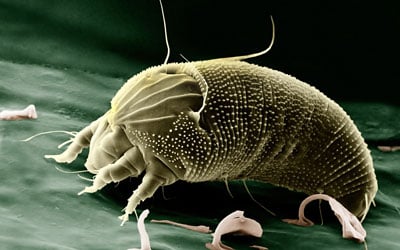
The workshop was about Forensic Taphonomy, combined with the (I think) relatively unknown discipline of Forensic Acarology. What is forensic acarology? You'd not be the only one asking. Acarology is the science of microscopic mites and macroscopic mites including ticks. Every single person is home to millions of mites - they live in the pores of our skin, in our hair, including our eyelashes, eyebrows and pubes. They live in our houses, share our beds and bathrooms.

Image result for dust mites actual size


Apparently the populations of mites found are specific to different parts of the house - there will be different species living on windowsills to the rest of the room, or on your pillow or in the middle of the bed. About  10 million house dust mites (HDMs) live in the average bed.

Not surprisingly, given their diversity and specificity to certain conditions, mites can be really useful in forensic situations. Mites, like flies, are quick to colonise a corpse, but they arrive on the bodies of the flies, jump off onto the cadaver and lie in wait to predate on the newly hatched fly larvae. They reproduce more quickly than flies, so can in some instances, be more accurate for estimating time since death. Their specificity means that they can be used in a similar way to other trace evidence, such as soil, diatoms or pollen, to determine where a suspect has been, if a body has been moved, or to link a suspect to a victim or scene. However, given their tiny size and the difficulties there are in identifying them, they have not taken off as a forensic diagnostic tool. More information about the use of mites in a forensic context can be found here.

The workshop focused on introducing Mexican police, criminologists, acarologists, entomologists and anthropologists to taphonomy, decomposition in different environments, search and location techniques, and exploring the potential for cadaver dog training and creating a human taphonomy facility (otherwise known as a 'body farm') to Mexico. As you can imagine, I was rather excited about this possibility! I ran an exercise where the delegates had to plan the structure of a potential research facility, taking into consideration different requirements such as storage, security, lab spaces etc.

Delegates engaged in the exercise to design an HTF

One of the designs
There are different ethical constraints and restrictions in Mexico compared to the UK, but there is a lot of interest among the right people for getting an HTF, as they can see the obvious benefits to forensic science.

During the week, we also undertook a practical exercise where we extracted soil mites from a site where a body (pig carcass) had been deposited.

Caroline collecting soil samples from the deposition site
Collecting the mites from the soil samples
There was a big difference between the soil mites collected from control samples 2m away from the carcass deposition site and those in the soil underneath where the body had been lying. Identification of the mites showed us that they were typical corpse-colonising species.

All our hard work was rewarded with some down time. We happened to be there during the Mexican Independence Day celebrations. There were fireworks, parades in the streets, amazing food and music. Here is a couple dressed in traditional clothes.


And of course, when you're in Mexico, you should do as the Mexicans do...

This is Mezcal, a spirit like Tequila, complete with 'worms' (butterfly larvae/caterpillars)
Needless to say, we had a fantastic time. I am confident that there is plenty of scope for research collaborations with delegates and the Universidad Autonoma de Queretaro, where the workshop was held, and, hopefully more academic and cultural exchanges in the future!


Thursday, 23 June 2016

Locard's Lab

I'm very pleased to have been interviewed by Locard's Lab, as part of their initiative to interview a lot of scientists from all different forensic disciplines and from different stages of their career. My interview can be found here. I think Locard's Lab is doing a sterling job bringing together interesting news about forensic research. Keep it up!